8 October 2025
Why Is My Carpet Sticky After Cleaning?
You have just had your carpet cleaned — or cleaned it yourself — and instead of feeling fresh and soft it feels tacky underfoot. It is a surprisingly common complaint. This guide explains why it happens, what you can do about it, and how to avoid it next time.
The Most Common Cause: Soap or Detergent Residue
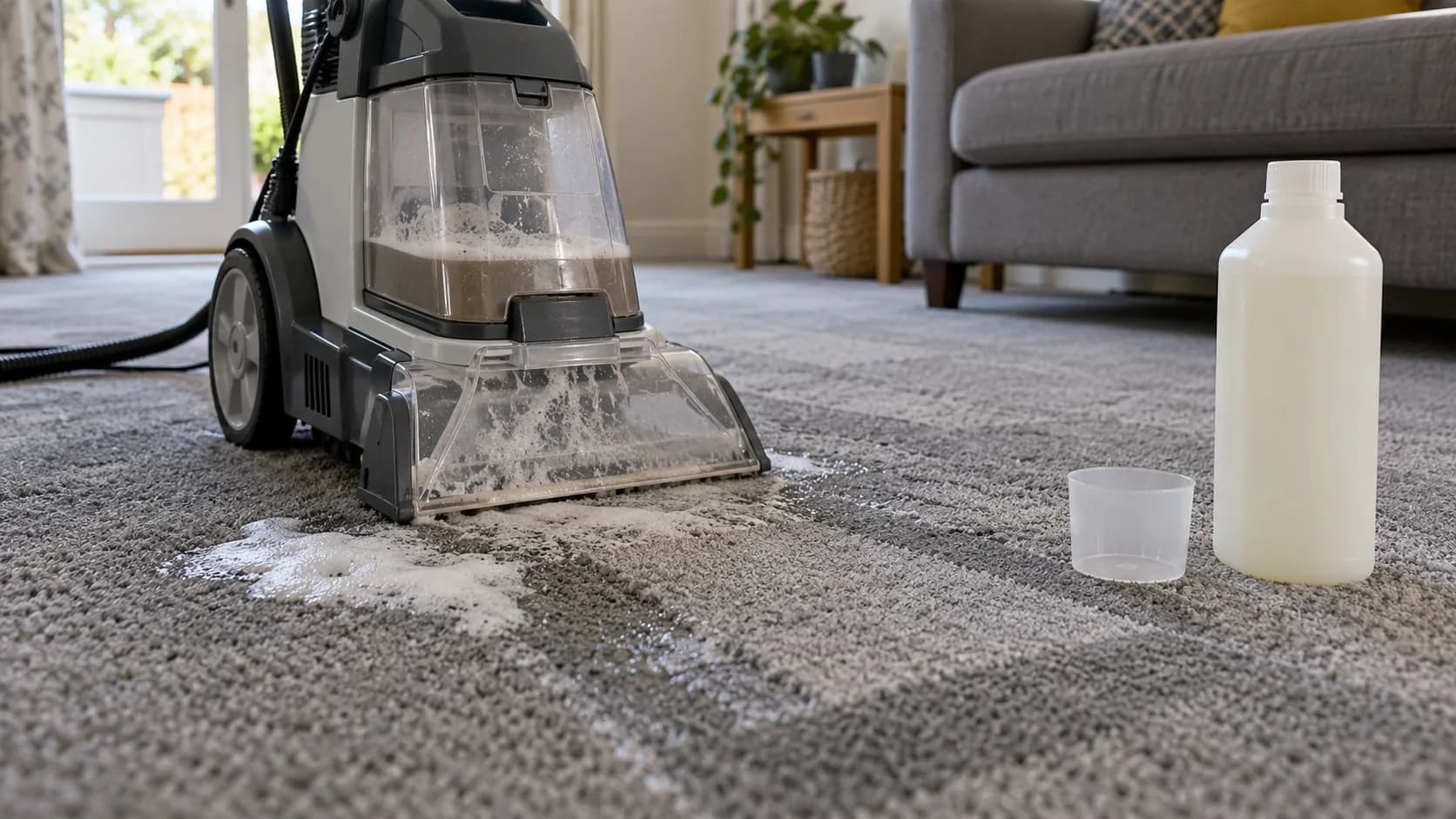
The single most frequent reason a carpet feels sticky after cleaning is leftover cleaning product. When shampoo, foam cleaner or detergent is not fully rinsed out, the residue dries on the fibres and creates a tacky surface. Dust, pet hair and dirt then stick to those fibres far more readily than they did before — so the carpet can end up dirtier than when you started, and it gets worse with every footstep.
This is especially common with over-the-counter carpet cleaning machines and spray-on foam products. Most consumer machines do not have the water pressure or extraction power to fully remove the lather they create, and spray foams are designed to be vacuumed rather than rinsed — but if you apply too much, vacuuming alone will not get it all out.
Other Reasons a Carpet Can Feel Sticky
Too Much Moisture Left Behind
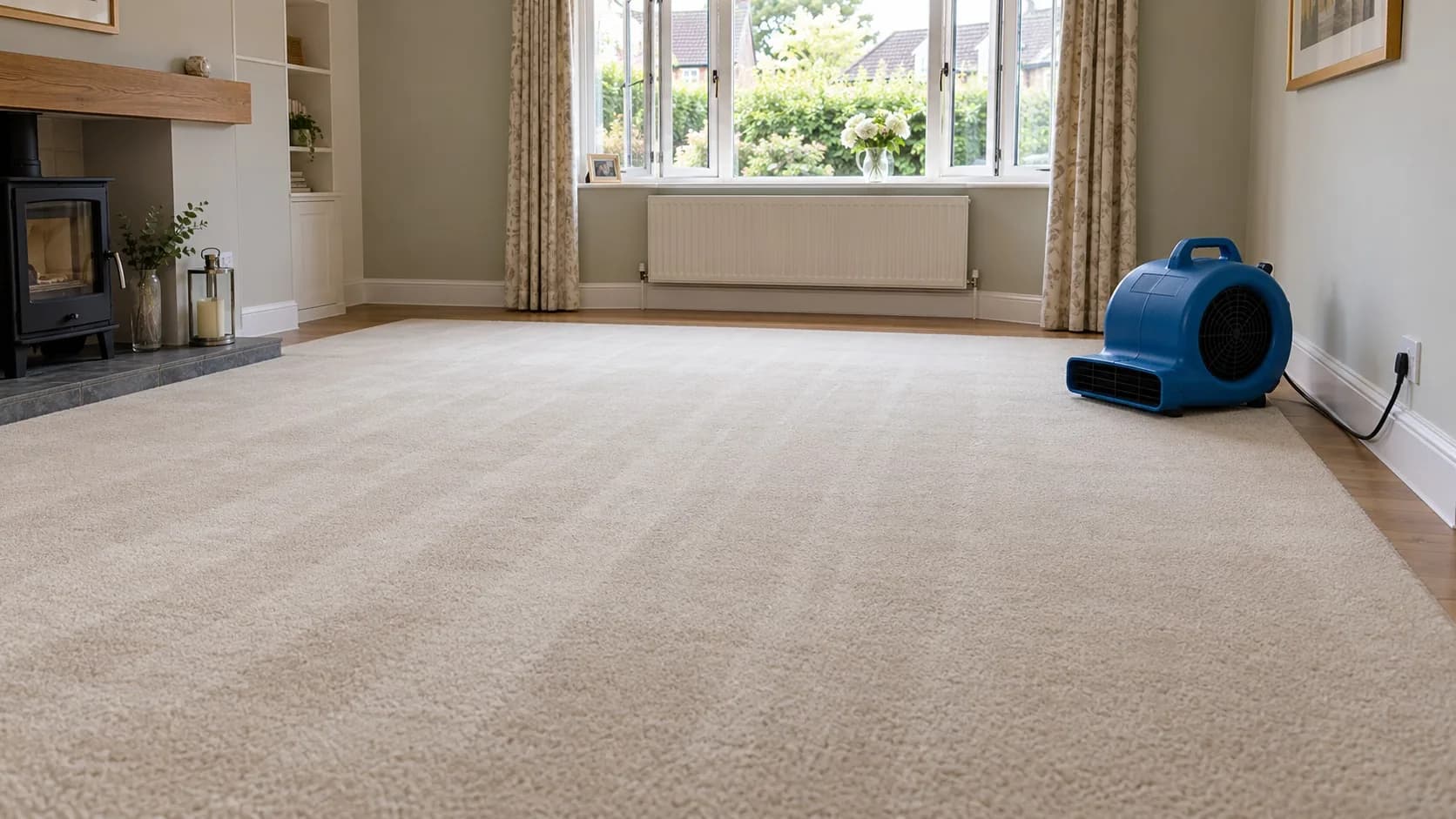
If the carpet is not dried quickly enough, moisture migrates down through the pile and can bring old soil and backing adhesives back to the surface — a process sometimes called wicking. The carpet may look clean when wet but feel stiff or gummy once it dries. Good airflow and a dehumidifier or drying fan can prevent this. Most professionally cleaned carpets should feel dry within two to four hours in a well-ventilated room.
A Spill or Stain That Was Not Fully Treated
Sugary spills — soft drinks, juice, sweet tea — leave sugar in the fibres even after the stain has visually cleared. Sugar is hygroscopic, meaning it attracts moisture from the air, which makes the area feel perpetually damp or sticky. Repeated rinsing with plain warm water is often needed to fully dilute and remove a sugary spill.
Old or Low-Quality Cleaning Products
Some older or cheaper cleaning formulas contain high amounts of surfactant that is very difficult to rinse out completely. If you are using a product that consistently leaves your carpet sticky, switching to a low-residue carpet cleaner designed for the type of machine you are using may help.
How to Check Whether Residue Is the Problem
Before you do anything else, try a simple test. Dampen a clean white cloth with plain cold water and press it firmly onto the sticky patch for about thirty seconds. If the cloth picks up foam or bubbles, residue is the cause. If the cloth comes away clean but the area still feels tacky when wet, a sugary spill is more likely.
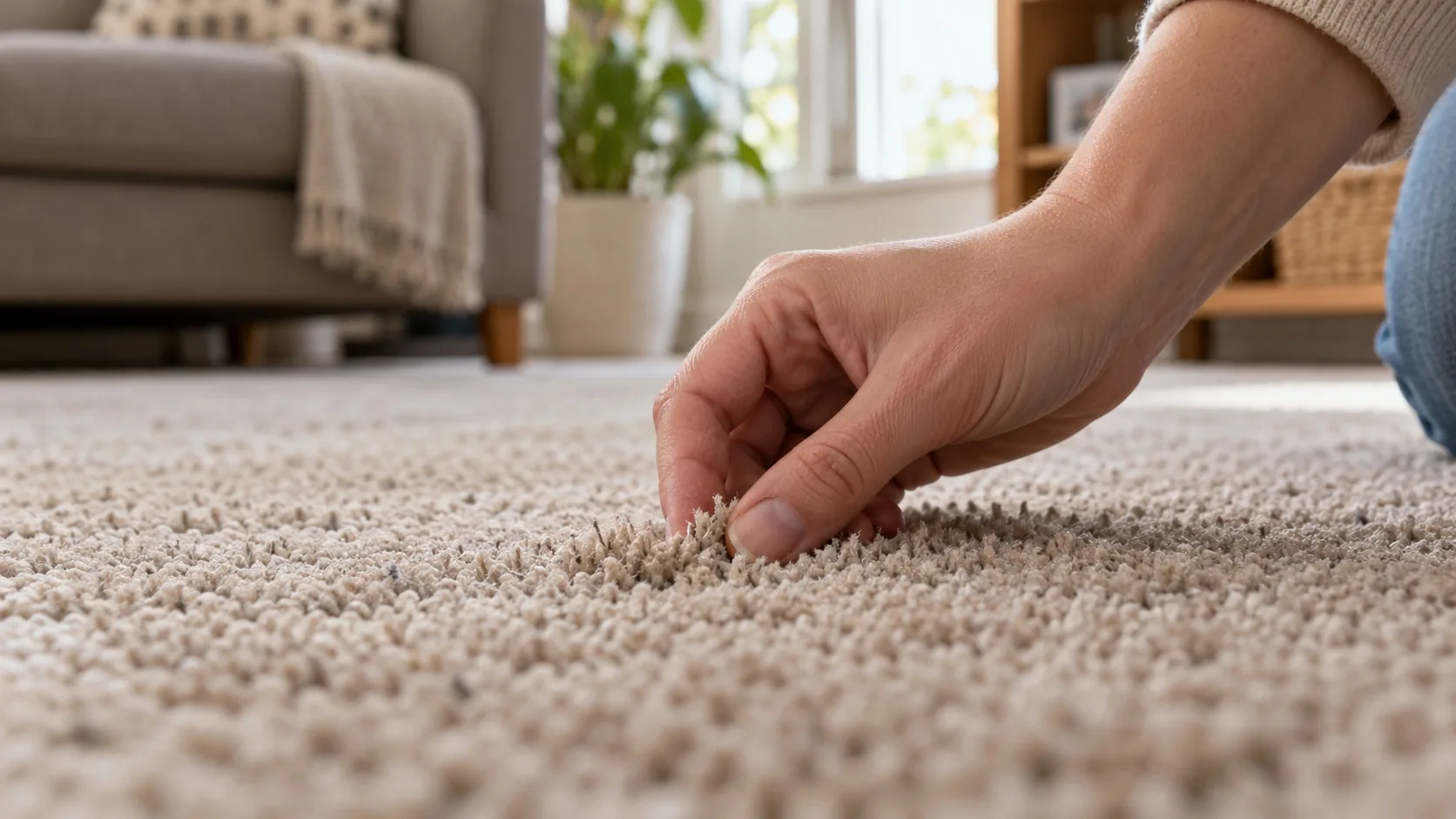
You can also run your fingertips across a dry section of carpet you know is clean and compare the feel. A clean carpet should feel slightly springy and dry. If the suspect area feels noticeably tackier or heavier, residue or wicking is almost certainly responsible.
Steps You Can Try at Home
These steps suit most standard synthetic carpets. If you have a delicate natural fibre such as wool or silk, check the manufacturer care label first or call a professional.
- Vacuum thoroughly. Remove as much loose soil as possible before introducing any moisture.
- Rinse with plain warm water. Fill a spray bottle with warm (not hot) water and lightly mist the affected area. Do not saturate it — you want to dilute the residue, not push it deeper.
- Blot, do not rub. Use a clean white cloth or paper towels and press firmly. Rubbing spreads residue and can damage fibres.
- Repeat the rinse and blot. Two or three passes are often needed to fully remove the residue.
- Dry quickly. Open windows, use a fan or a dehumidifier, and place a clean towel weighted down over the damp patch to draw moisture upward. Avoid walking on the carpet until it is completely dry.
- Vacuum again once dry. This lifts the pile and removes any loosened particles.
Common Mistakes to Avoid
- Using too much cleaning product. More is not better with carpet shampoo. Always use the minimum amount stated on the label — or less. A concentrated solution that is not fully rinsed will make the problem worse.
- Applying heat too early. Blasting a sticky area with a hair dryer before you have rinsed out the residue will bake it into the fibres, making it much harder to remove.
- Using vinegar as a rinse on wool. Diluted white vinegar is sometimes suggested as a neutralising rinse and can work on synthetic carpets, but it can damage wool fibres. Stick to plain water unless the product is confirmed safe for your carpet type.
- Walking on a damp carpet. Foot traffic on a damp carpet presses residue back down into the backing and recontaminates freshly rinsed fibres.
When to Call a Professional
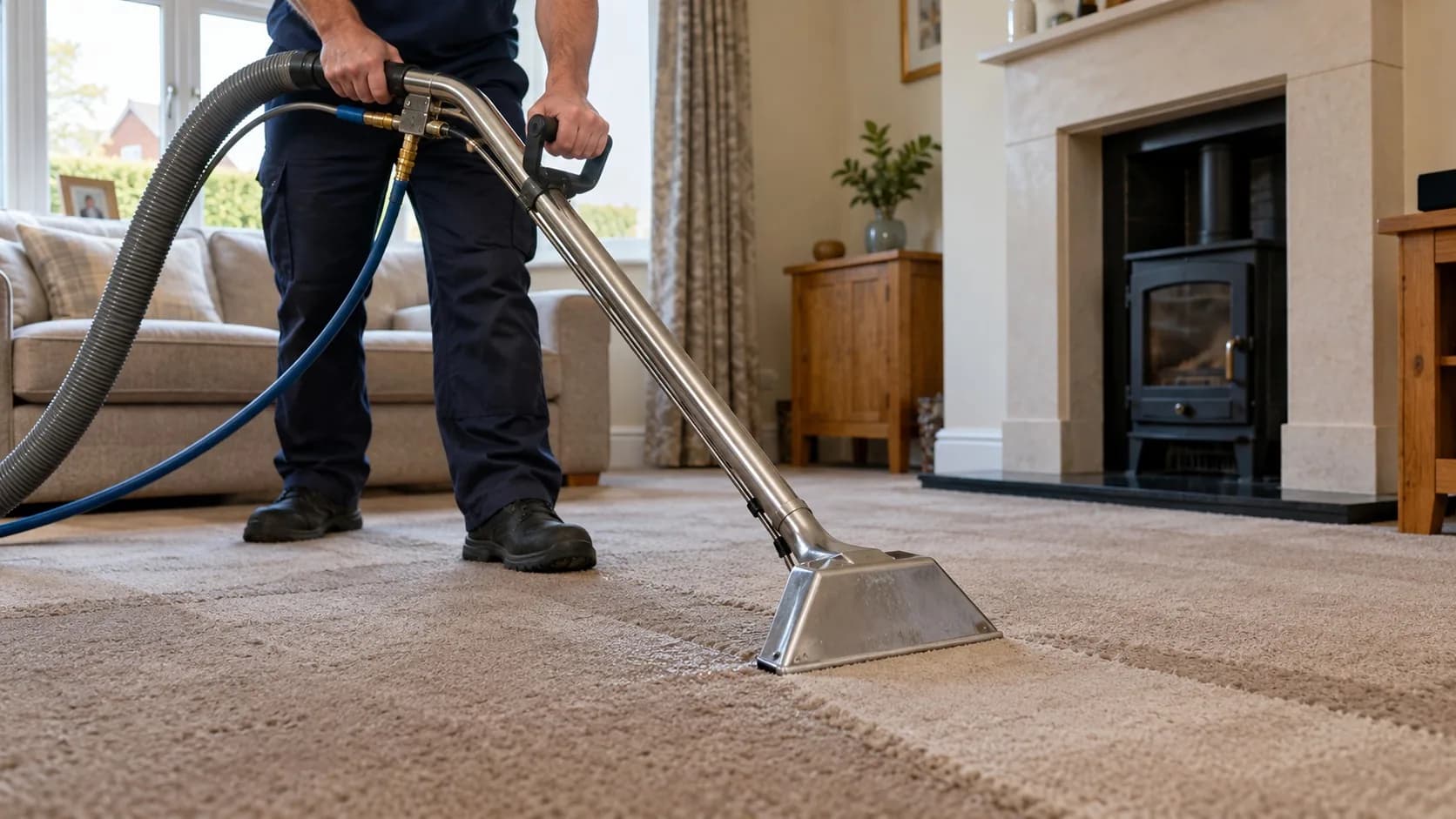
If the stickiness covers a large area, keeps coming back after rinsing, or if the carpet is wool, natural fibre or a high-value rug, a professional hot-water extraction clean is the most reliable solution. Professional-grade equipment uses higher water pressure and far stronger suction than any consumer machine, which means residue and dirty water are fully removed rather than redistributed.
At Luxora Steam Cleaning we use truck-mounted and portable hot-water extraction equipment across Huddersfield, Halifax and Bradford. The process flushes the fibres with high-temperature water and removes it immediately, leaving carpets clean and residue-free — typically dry within two to three hours.
If you have questions about our carpet cleaning service or want to discuss a specific stickiness problem, get in touch and we will be happy to advise.
Frequently Asked Questions
How long should a carpet take to dry after cleaning?
Most carpets cleaned by a professional service dry within two to four hours in a well-ventilated room. DIY machine cleans can leave more moisture behind and may take six to twelve hours or more. Using fans and opening windows significantly speeds up the process.
Is a sticky carpet after cleaning a sign of a bad job?
Not always. Even a well-intentioned DIY clean can leave residue if the machine is underpowered or too much product was used. With professional services, it can sometimes indicate the operator used excess detergent or the equipment extraction was not working at full efficiency. In either case, a plain-water rinse pass should resolve it.
Can I use bicarbonate of soda on a sticky carpet?
Bicarbonate of soda can help absorb odours and some surface moisture, but it will not dissolve or remove detergent residue. If you apply it to a sticky area, make sure you vacuum it thoroughly once it has sat for a while — leftover bicarb can itself become a fine powder residue in the pile.
My carpet only feels sticky in one spot — why?
A single sticky patch that was not sticky before the clean is most often an old spill that has wicked up from deeper in the carpet backing during the cleaning process. Sugar-based drinks are the usual culprit. Rinse the area thoroughly with plain warm water and blot dry. If it keeps coming back, professional extraction is the most reliable fix.
Need Professional Carpet Cleaning in Huddersfield?
We cover Huddersfield, Halifax and Bradford. Call us or request a free quote and we will get back to you promptly.